


If you’ve searched for the cost of basement waterproofing, you’ve probably noticed something frustrating: nobody gives you a straight number. That isn’t because contractors are hiding something. It’s because the price depends almost entirely on why water is getting in and what it takes to stop it for good.
A basement in Lafayette sitting on heavy clay soil has different problems than a newer home in Carmel with a builder-grade drain tile that’s clogged. Indiana’s wet springs, freeze-thaw winters and dense soils all put pressure on foundation walls, and the right fix changes from one house to the next.
Today, we will walk you through the factors that actually move the price, so you know what to expect before anyone walks through your door.
Why Basement Waterproofing Costs Vary So Much
Basement waterproofing costs vary because the solution has to match the source of the water. Two basements can both look wet and need completely different repairs.
Water might be seeping in where the wall meets the floor (the cove joint), pushing through cracks in the foundation, or coming up from saturated soil under the slab. Sometimes the main issue is outside the home entirely, like downspouts dumping water right next to the foundation or a yard that slopes toward the house.
If you’re still figuring out what kind of water problem you have, our guide on flooded basements vs. water in the basement can help you sort it out. Once you know the cause, the cost conversation gets a lot clearer.
Interior vs. Exterior Waterproofing
Interior waterproofing is usually the less disruptive option, while exterior waterproofing typically involves more labor because the soil around the foundation has to be excavated.
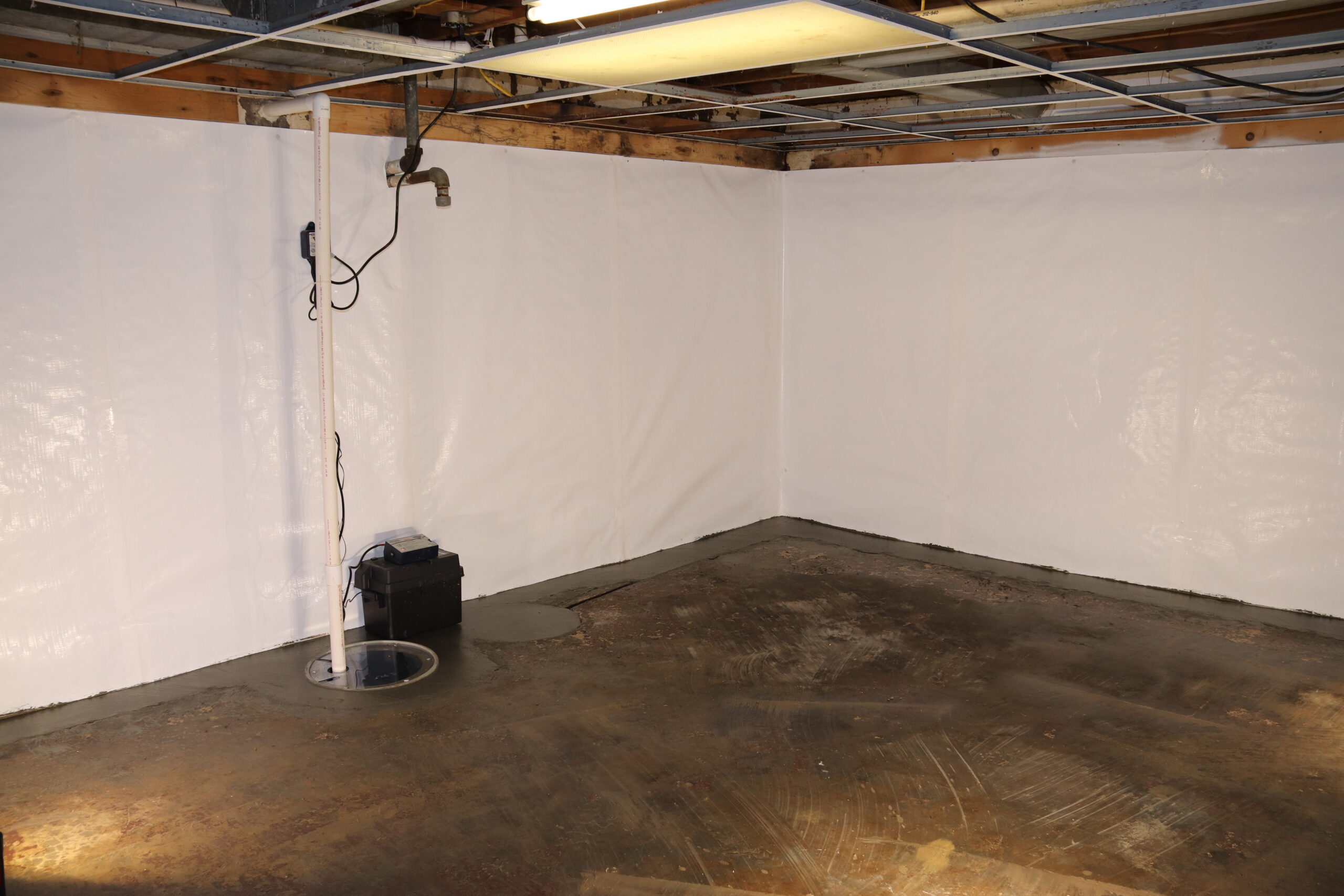
Interior systems manage water once it reaches the foundation. They collect it along the perimeter of the basement and direct it to a sump pump, which moves it away from the home. Because the work happens inside, there’s no need to dig up landscaping, driveways, or patios.
Exterior waterproofing tackles water before it reaches the wall. Crews dig down along the foundation, apply a barrier to the outside of the wall, and often add drainage at the footing. It can be the right call in some situations, but excavation depth, access around the home, and restoring the yard afterward all add to the scope.
For most New Haven homeowners dealing with seepage and hydrostatic pressure, an interior drainage system is the practical, long-lasting solution. A good inspection will tell you which approach your home actually needs.
Drainage Systems & How They Affect Cost
The size of your basement and the length of the drainage system are some of the biggest cost factors in interior waterproofing.
A perimeter drainage system runs along the inside edge of the basement floor. To install it, the crew removes a strip of concrete along the walls, places the drain, connects it to a sump pit, and then patches the floor. More linear footage means more material and more labor.
Other details that can affect scope include:
- Whether the system runs along every wall or only where water is coming in
- The condition of the existing floor and walls
- Obstacles like furnaces, water heaters, stairs, or support posts
- Whether an old, failing system needs to be removed first
Sump Pumps, Battery Backups & Discharge Lines
The sump pump is the heart of most waterproofing systems, so the type of pump and its setup play a real role in cost.
Some homes already have a sump pit that only needs a better pump. Others need a new pit installed from scratch. Many homeowners also add a battery backup, which keeps the system running if the power goes out during a storm. That matters in Indiana, where heavy spring and summer storms can knock out power right when your basement needs protection most.
Where the water goes after it leaves the pump matters too. Discharge lines need to carry water far enough away from the foundation that it doesn’t just soak back into the soil and return. Longer runs or tricky routing around the property can add to the job.
When Wall Repair Is Part of the Job
If your foundation walls are cracked, bowing or shifting, they may need to be stabilized as part of the waterproofing project.
Waterproofing a wall that’s still moving is a short-term fix at best. Hydrostatic pressure from saturated clay soil is one of the most common reasons basement walls bow in Indiana, and the same pressure is often what’s pushing water inside. When we find structural movement during an inspection, we address the wall and the water together so the repair holds up.
If you’re seeing wall cracks or bowing, our breakdown of basement wall repair cost in Indiana explains the factors that affect that side of the project.
Finished Basements & Access Challenges
A finished basement can add to the cost of waterproofing because drywall, flooring, and built-ins may need to come out so the crew can reach the walls and floor edge.
How much needs to be removed depends on where the problem is. In some cases, only a few sections of drywall need to come out. In others, carpet or flooring along the walls has to be pulled up to install drainage. Tight stairwells, low ceilings, or limited room to move equipment can also affect how long the job takes.
If you’re planning to finish your basement, it’s worth having it inspected before you build. Fixing water problems first is far easier than tearing out new walls later.
What a Free Inspection Tells You About Cost
A free inspection is the only reliable way to get an accurate price because it identifies the actual cause of the water instead of guessing.
At Crossroads Foundation Repair, our inspections focus on finding the root cause. We look at the walls, floor, grading, gutters, and any signs of structural movement. Then we walk you through what we found and what we recommend, with no scare tactics and no pressure to sign on the spot.
We also do a walkthrough before and after the work, so you know exactly what’s being done and can see the finished result. Our waterproofing systems are backed by a lifetime transferable warranty, which adds value if you ever sell your home.
Financing Options for Basement Waterproofing
Crossroads offers flexible financing options to help homeowners protect their basements without waiting.
Options include 12-month and 6-month no-interest, no-payment plans, along with fixed-rate loans as low as 5.99% APR. That gives you room to handle the problem now instead of letting water damage get worse while you save up.
Frequently Asked Questions
Is Interior or Exterior Basement Waterproofing Cheaper?
Interior waterproofing is generally less expensive than exterior waterproofing because it doesn’t require excavating around the foundation. Exterior work involves more labor, equipment, and yard restoration. The right choice depends on where the water is coming from and the condition of your foundation.
Does Homeowners Insurance Cover Basement Waterproofing?
Homeowners insurance typically doesn’t cover waterproofing itself, since it’s considered preventive maintenance. Some policies may cover certain types of sudden water damage, but coverage depends on your policy and the cause. Check with your insurance provider for details.
Do I Need a Sump Pump if I Waterproof My Basement?
Most interior waterproofing systems use a sump pump to remove the water that the drainage system collects. Without a pump, that water has nowhere to go. Adding a battery backup helps keep the system running during power outages.
Can I Waterproof a Finished Basement Without Tearing It Out?
In many cases, you won’t need to remove everything, but some drywall or flooring along the walls usually has to come out to install drainage. How much depends on where the water is entering. An inspection will show exactly what needs to be removed.
Get a Clear Price for Your Basement
Every basement is different, and the only honest price is one based on what’s actually happening in your home. Whether you’re in Fort Wayne, Muncie, South Bend, Bloomington or anywhere else we serve across Indiana, our team will give you a straightforward answer and a plan that lasts.
Schedule a free, no-obligation inspection with Crossroads Foundation Repair today.
This article was reviewed for accuracy by Steven Kyle Leman, Owner and General Manager of Crossroads Foundation Repair. Steven has 15 years of hands-on experience with foundation repair and waterproofing systems across Indiana homes and holds certification through the National Foundation Repair Association with continuing education each year.