

Basement Wall REPAIR IN INDIANA
Stop Cracks, Bowing,
And Structural Damage
If your basement walls are cracking, bowing inward, or showing signs of movement, the cause is usually pressure from soil and water outside the foundation. Crossroads Foundation Repair helps Indiana homeowners stabilize and reinforce basement walls using systems designed to restore strength and prevent further shifting. We’ll explain what’s happening, why, and what it takes to fix it.

WHAT IS BASEMENT WALL DAMAGE?
WHEN CRACKS AND BOWING INDICATE FOUNDATION STRESS
In Indiana, clay-heavy soils and year-round moisture create pressure on basement walls. Over time, that pressure can cause walls to crack, bow, or even shift. Whether you see horizontal cracks or curved walls, it’s a clear sign of foundation movement that requires professional attention.
Many Indiana basements are built with block walls, which are especially prone to stair-step cracking and bowing under pressure.
The state’s high water table, combined with poorly draining clay soils, creates an environment where wall movement can happen quickly; especially in spring and fall. Early intervention saves time and money. Waiting too long could mean needing full wall replacement, which is more invasive and expensive than our engineered wall reinforcement systems.
Common Signs You Need wall Repair:
Basement wall damage often starts small and gets worse over time, especially in Indiana where soil pressure and moisture work against foundation walls year-round. Here’s what to watch for.
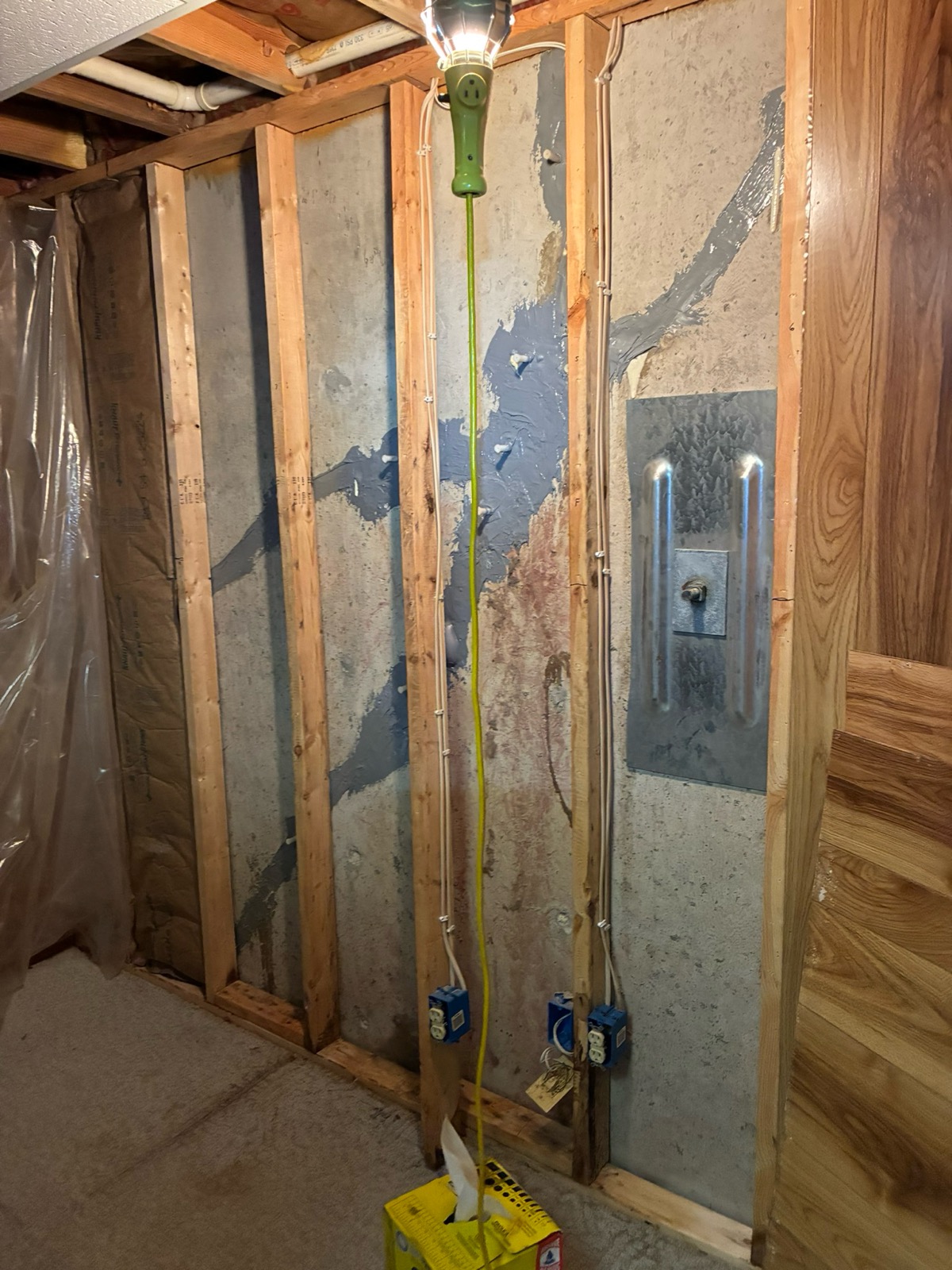
Horizontal or stair-step cracks – Usually caused by lateral soil or hydrostatic pressure pushing against the wall, especially after prolonged wet seasons.
Walls bowing inward – A curved shape indicates ongoing pressure and movement that should be evaluated.
Gaps where the wall meets ceiling or floor – Separation at these joints suggests the wall has shifted enough to pull away from the surrounding structure.
Moisture seeping through cracks – Water entering through wall cracks can accelerate damage, invite mold, and signal increasing pressure from outside.
Doors or windows sticking – Frames going out of square near the basement level can indicate wall movement affecting the structure above.
Our engineered wall anchors and carbon fiber systems stop movement and restore safety in your South Bend home.
OUR BASEMENT WALL REPAIR PROCESS
Reinforcement solutions that Restore Wall Strength
Wall movement is a sign that your Fort Wayne foundation is under serious stress and waiting can make repairs more difficult and expensive. We begin with a comprehensive wall inspection to assess tilt, bowing, cracks, and soil pressure.
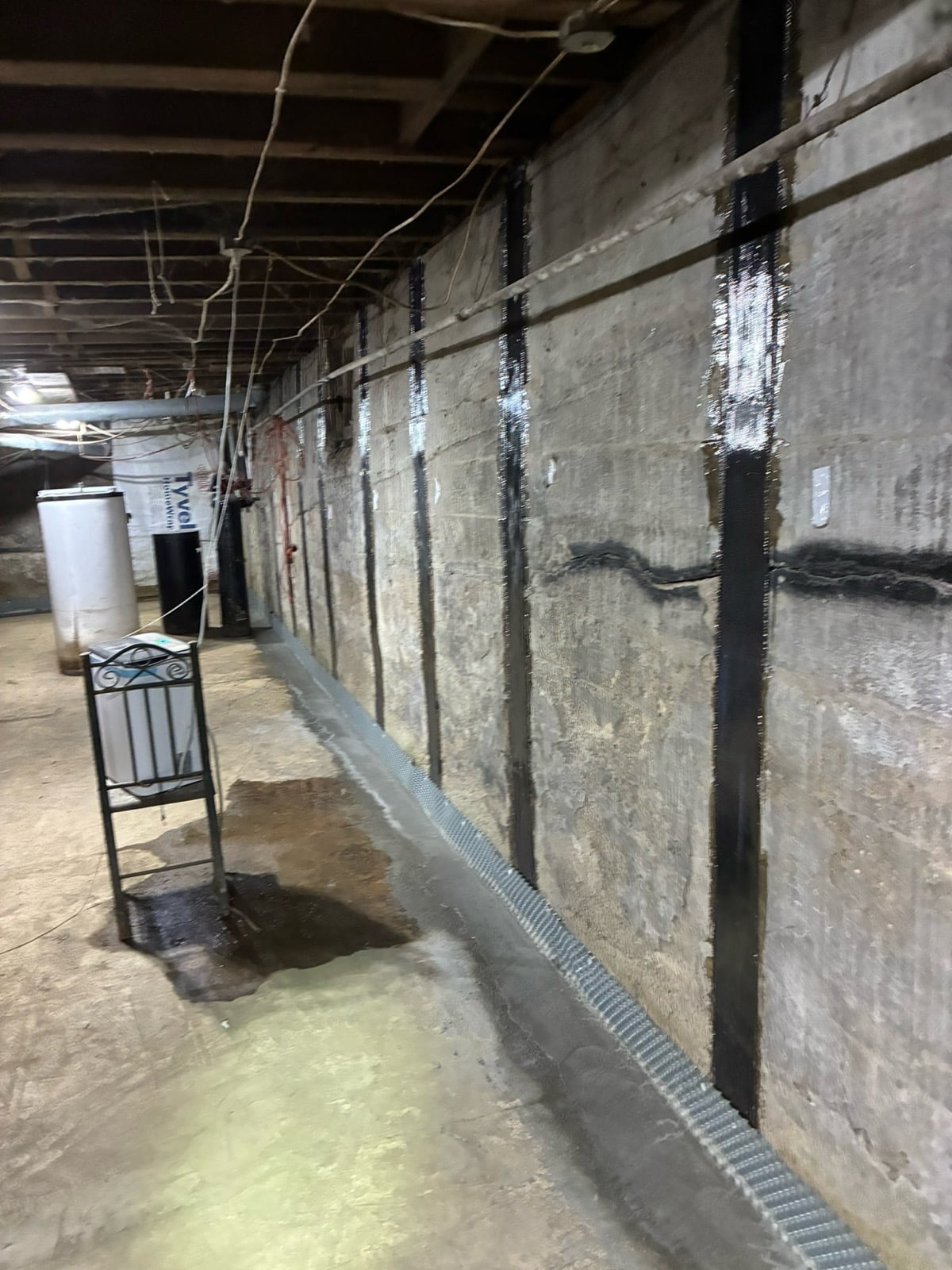
Based on the severity, we install carbon fiber straps, steel braces, or wall anchors engineered to stop movement and restore strength. These systems are minimally invasive and designed to provide long-term stability even in Indiana’s expansive soil conditions.
Wall Movement Evaluation
Assess cracks, bowing, tilt, and pressure sources.
Custom Repair Design
Match the reinforcement method to severity and wall type.
Installation of Anchors, Braces, or Carbon Fiber
Stabilize the wall and restore structural support.
Adjustments Over Time
Gradually straighten the wall when conditions allow.
Final Quality Check
Confirm wall stability, clean finish, and proper function.
FULL CRAWL SPACE INSPECTION
DRAINAGE & MOISTURE CONTROL
VAPOR BARRIER INSTALLATION
STRUCTURAL REINFORCEMENT
FINAL SEALING & CLEANUP
What Indiana Homeowners Should Know About Wall Damage
Basement Wall Repair FAQs
Can leaning or bowed walls be straightened?
In many cases, yes. Using wall anchors or braces, we can often gradually realign basement walls over time as soil conditions allow. The approach depends on how far the wall has moved and what type of reinforcement fits the situation.
What causes basement walls to bow or crack?
The most common cause is lateral pressure from saturated soil pushing against the outside of the wall. In Indiana, clay-heavy soil that expands when wet and contracts when dry puts ongoing stress on basement walls, especially during spring and fall.
Is carbon fiber strong enough to stop wall movement?
Yes. Carbon fiber straps are a proven reinforcement method for walls with early to moderate bowing or cracking. For more severe movement, wall anchors or steel braces may be a better fit, which is why the repair method should match the severity.
Will I need to excavate outside?
In most cases, no. Many basement wall repairs, including carbon fiber, steel braces, and certain anchor systems, are installed from the interior with minimal disruption. We’ll explain the approach and any access needs during your inspection.
How quickly should I fix a cracked wall?
It depends on the type of crack and whether it’s progressing. Stable hairline cracks may not need immediate repair, but horizontal cracks, bowing, or cracks that are widening should be evaluated sooner to keep your options open and costs down.
When is basement wall stabilization necessary?
Stabilization is typically recommended when a wall is actively bowing, leaning, or showing horizontal cracking that indicates ongoing pressure. If movement is progressing or water intrusion is worsening, early stabilization can prevent the need for more invasive and expensive repairs later.
Still Have Questions About
Basement Wall Repair?
Can’t find the answer you’re looking for? Our team is here to help. Whether you’re concerned about foundation stability, crawl space conditions, or water intrusion, we’ll walk you through your options. No pressure, no gimmicks. Give us a call or fill out the form to get the answers and peace of mind you need.
What Homeowners Are Saying
See Why Crossroads Is a Trusted Local Name

I chose this company because of the salesman‘s knowledge and honesty. There was no pressure to sign on the dotted line, and the discount that he originally put into the paperwork applied. The workers were excellent and …
I chose this company because of the salesman‘s knowledge and honesty. There was no pressure to sign on the dotted line, and the discount that he originally put into the paperwork applied. The workers were excellent and very knowledgeable. The company followed up with an inspection from a supervisor and told me if I had any problems or concerns to contact them immediately. I would highly recommend them to anyone looking for foundation repair.
EXCELLENT WORK! HAD TO WORK WITH TWO OTHER CONTRACTORS FOR THIS PROJECT! CREW WAS PROMPT AND “SATISFACTION DRIVEN”. IT WAS IMPORTANT TO THEM THAT WE WERE COMPLETELY SATISFIED. WE ARE IN TERRE HAUTE AREA …
EXCELLENT WORK! HAD TO WORK WITH TWO OTHER CONTRACTORS FOR THIS PROJECT! CREW WAS PROMPT AND “SATISFACTION DRIVEN”. IT WAS IMPORTANT TO THEM THAT WE WERE COMPLETELY SATISFIED. WE ARE IN TERRE HAUTE AREA WHICH MEANT CREWS HAD TO COORDINATE WITH THEIR JOB MANAGER AND US. LIFTED VERYH LARGE RESIDENTIAL DRIVEWAY AND INSTALL 45 FOOT DRAIN ACROSS THE DRIVE THROUGH A NEW RETAINING WALL THAT WAS COMPLETED BY ANOTHER CONTRACTOR.

Jake Clasen and Crossroads were extremely easy to work with – and they did an awesome job repairing my foundation issues. I worked with 2 different foundation companies before reaching out to Crossroads, but the …
Jake Clasen and Crossroads were extremely easy to work with – and they did an awesome job repairing my foundation issues. I worked with 2 different foundation companies before reaching out to Crossroads, but the professionalism, price, and speedy repairs set them far apart from their competition. Please include Crossroads as one of your considerations – you won’t be disappointed!

Great customer service, communication, transparency and work. Every staff member I talked to was great and knowledgeable. I could not be happier with the job they did and cleanliness.
I reached out to Crossroads for a slab leveling project at my home, and I couldn’t be more impressed with their professionalism and customer service. They quickly sent out Trent to evaluate the situation and provide an …
I reached out to Crossroads for a slab leveling project at my home, and I couldn’t be more impressed with their professionalism and customer service. They quickly sent out Trent to evaluate the situation and provide an estimate. He was honest, straightforward, and offered fair pricing without any pressure.
Scheduling was quick and easy, and they got me on the calendar right away. On the day of the repair, the team ran into some unexpected complications that revealed the project was more involved than initially anticipated. Davis, the technician on site, did a great job keeping me informed throughout the process.
Trent followed up personally to go over all the new findings and walked me through the available options. After discussing the extent of the repair needed, we mutually agreed that pursuing an alternative solution would be the best course of action.
Even though the project didn’t move forward, I really appreciated the transparency, professionalism, and integrity shown by the entire team. I would absolutely recommend Crossroads to anyone looking for honest and reliable service.

Crossroads did an excellent job with my repair work for a bowed in foundation. They were strong communicators, efficient with their tasking, and offered a fair price. I’d recommend them for any foundation repairs …
Crossroads did an excellent job with my repair work for a bowed in foundation. They were strong communicators, efficient with their tasking, and offered a fair price. I’d recommend them for any foundation repairs needs.
Crossroads Foundation Repair impressed from the very first contact with a very knowledgeable onsite evaluation (Christian B), to the crew who did the work. The crew installed 3 wall anchors to lift and stabilize an …
Crossroads Foundation Repair impressed from the very first contact with a very knowledgeable onsite evaluation (Christian B), to the crew who did the work. The crew installed 3 wall anchors to lift and stabilize an exterior wall. One side of the wall anchor location was underneath the deck, so the dirt had to be removed by hand!! The guys worked so hard and did such a great job! Definitely recommend this company for any foundation problems!

I could not be happier with my experience with Crossroads Foundation Repair! Everything moved so quickly and smoothly when I reached out to them to install and egress window. They had a quote to me in a week, after I …
I could not be happier with my experience with Crossroads Foundation Repair! Everything moved so quickly and smoothly when I reached out to them to install and egress window. They had a quote to me in a week, after I gave the go ahead, they scheduled me for 2 weeks later and completed the window in 1 day. Very happy with everyone from the ladies on the phones all the way through to final walk through it has been an excellent experience and I would recommend them to anyone!
We had Crossroads out to fix a sagging floor in one of our rental houses. They were able to quickly identify the issue and came up with a plan to fix it as inexpensive as possible. The pre planning, execution and post …
We had Crossroads out to fix a sagging floor in one of our rental houses. They were able to quickly identify the issue and came up with a plan to fix it as inexpensive as possible. The pre planning, execution and post inspection was all done very professionally and promptly.
I would highly recommend Crossroads Foundation Repair to anyone needing their wide range of services.
My boyfriend and I are first-time homebuyers, and since the house we’re buying is on the older side, we reached out to Crossroads for a free foundation evaluation. TRENT handled our inspection and was awesome! He was …
My boyfriend and I are first-time homebuyers, and since the house we’re buying is on the older side, we reached out to Crossroads for a free foundation evaluation. TRENT handled our inspection and was awesome! He was super thorough, honest, and easy to talk to. He clearly explained what needed attention right away and what we should keep an eye on for the future. As a young homebuyer himself, he totally understood our budget and never tried to upsell or take advantage. He was personable, professional, and made the whole process stress-free. Highly recommend Trent and Crossroads for any foundation concerns!

Stop Basement Wall Damage Before It Spreads
Schedule A Free,
No-Obligation Inspection
Cracked, bowing, or leaning basement walls are a sign of serious structural stress. Crossroads Foundation Repair offers expert inspections and repair solutions to protect your Lafayette home.
"*" indicates required fields