


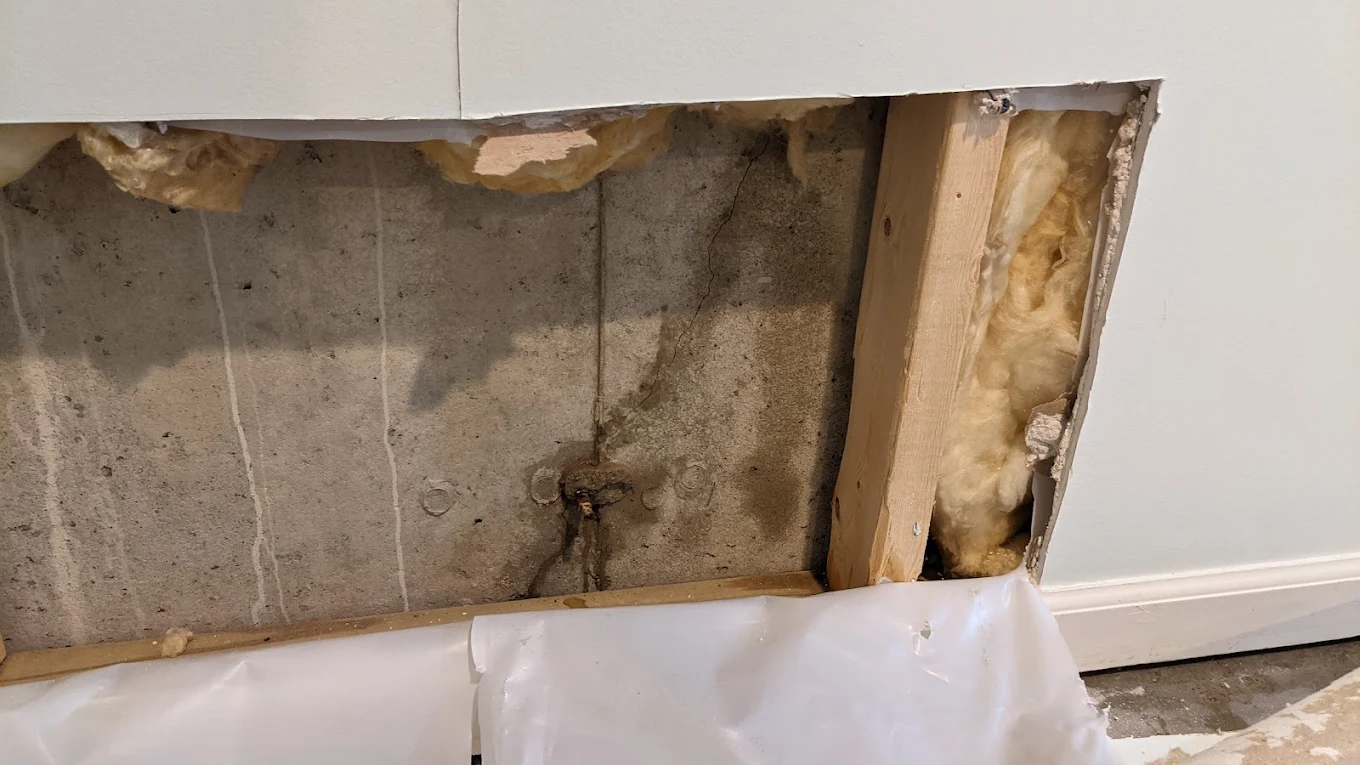
A bowing basement wall can be unsettling. You might notice a horizontal crack, a wall that looks slightly curved, or a section that seems to lean inward after a wet season. In Indiana, this is a common issue because our homes deal with spring storms, snowmelt, humidity, and freeze-thaw cycles that change how soil behaves around the foundation.
At Crossroads Foundation Repair, we help homeowners understand what causes basement walls to bow, how serious it is, and what solutions actually work.
What “Bowing” Basement Walls Actually Means
“Bowing” means the basement wall is moving inward toward the basement space. Sometimes it happens gradually, and homeowners spot it when a wall looks slightly curved or when a crack pattern changes over time. Bowing is different from minor surface cracking because it usually indicates pressure from outside the foundation that the wall is struggling to resist.
You may see bowing alongside horizontal cracks, stair-step cracks in block walls, or gaps that appear where the wall meets the floor or ceiling. Even if the basement is finished, signs can still show up as wavy drywall, cracks along seams, or trim that starts pulling away.
The Most Common Causes of Bowing Basement Walls in Indiana
Basement walls bow when the soil and water around the home create more force than the wall can handle. In Indiana, a few causes show up again and again.
Hydrostatic Pressure From Saturated Soil
When soil becomes saturated, it gets heavier and pushes harder against basement walls. After periods of heavy rain or snowmelt, that pressure increases and can force water and movement toward the foundation.
Poor Drainage (Gutters, Downspouts, Grading)
If gutters overflow, downspouts dump water near the home, or the yard slopes toward the foundation, water collects where it should not. Over time, that repeated saturation can create ongoing pressure on basement walls.
Freeze-Thaw Cycles & Expanding Soil
Indiana winters and early spring swings can cause soil to expand and contract. As moisture in the ground freezes and thaws, the soil shifts and can push against foundation walls, especially when drainage keeps the area wet.
Clay Soil Movement & Soil Expansion
Many Indiana areas have clay-heavy soil, and clay expands when it absorbs water. That expansion increases lateral pressure against basement walls, which can contribute to bowing and cracking over time.
How Serious Is a Bowing Basement Wall?
Not every crack means a wall is failing, but bowing deserves attention because it can worsen if the pressure stays the same or increases. The seriousness usually comes down to how much the wall has moved, whether the movement is ongoing, and what other structural signs are present.
A wall that is slightly out of plumb with no progressing cracks may not require the same response as a wall with visible curvature and widening horizontal cracking. If you are seeing new changes after storms, increasing bowing, or water intrusion along with movement, it’s a strong sign the wall needs a professional evaluation.
Bowing also matters because it can affect more than the basement wall. In some homes, wall movement is connected to floor framing, stair-step cracking, or changes in how doors and windows operate. The earlier you address it, the more repair options you typically have.
What To Do if Your Basement Wall Is Bowing
If you suspect your basement wall is bowing, a few practical steps can help you stay organized and reduce risk while you plan next steps.
- Document what you see: Take photos and note where cracking or movement appears. If possible, measure the wall at the widest point to track changes over time.
- Check obvious drainage issues: Look for clogged gutters, short downspouts, or low spots that hold water near the foundation.
- Move water away from the home: Extend downspouts, correct splash areas, and avoid watering directly next to the foundation.
- Avoid patch-only fixes: Cosmetic crack fillers may hide the symptom but do not address the pressure causing movement.
- Schedule a professional inspection: An expert can determine the cause, severity, and the best repair method for long-term stability.
Repair Options That Actually Address the Problem
A lasting repair plan should do two things: stabilize the wall and reduce the conditions that caused the pressure in the first place. The right method depends on the wall type, degree of bowing, and what the soil and moisture conditions look like.
Wall Anchors
Wall anchors can stabilize bowing walls by bracing them against stable soil outside the foundation. They are often used when there is enough space outside the wall to install anchors properly, and they can provide strong long-term support.
Carbon Fiber Reinforcement
Carbon fiber reinforcement is a low-profile option that adds strength to the wall without taking up much interior space. It’s often a good fit when walls show cracking or early bowing and need added reinforcement to prevent further movement.
Steel Bracing
Steel braces provide strong vertical support and can be installed along the wall to help resist ongoing pressure. This method is commonly used when the wall needs significant reinforcement and when interior space allows for bracing placement.
Drainage & Waterproofing Support
If water is driving the pressure against the wall, drainage and waterproofing work can be a key part of the long-term solution. Controlling how water moves around the foundation can reduce the conditions that contribute to ongoing bowing and seepage. Many homeowners benefit from combining stabilization with moisture management, depending on what the inspection shows.
FAQs About Bowing Basement Walls
Can a bowing basement wall be fixed without replacing it?
In many cases, yes. Stabilization systems like anchors, braces, or carbon fiber reinforcement can strengthen the wall and help prevent further movement without full replacement.
Does waterproofing alone stop a wall from bowing?
Not always. Waterproofing helps manage water, but bowing is a structural pressure issue. Many homes need wall stabilization as well, depending on movement and cracking.
How long do basement wall repairs take?
Many wall stabilization projects can be completed in a few days. The timeline depends on the method used and site conditions, and you should get a clear schedule after inspection.
Will repairs affect my finished basement?
Sometimes, but not always. We look for the least disruptive approach that still provides long-term protection, and we’ll explain what access is needed before work begins.
Get Clear Answers About Your Basement Wall
If your basement wall is bowing, the best next step is not guessing or patching. It is getting a clear evaluation of what is causing the movement and what it will take to stabilize the wall for the long term. Crossroads Foundation Repair helps Indiana homeowners protect their homes with honest assessments, practical recommendations, and proven repair systems designed to last.
Schedule a free, no-obligation inspection and get clear answers without pressure.
This article was reviewed for accuracy by Steven Kyle Leman, Owner and General Manager of Crossroads Foundation Repair. Steven has 15 years of hands-on experience with foundation repair and waterproofing systems across Indiana homes and holds certification through the National Foundation Repair Association with continuing education each year.