


If you’ve been researching crawl space solutions, you’ve probably seen both “encapsulation” and “waterproofing” mentioned, sometimes interchangeably. They’re not the same thing, and knowing the difference matters when deciding how to protect your home. Both address moisture, but they solve different problems in different ways. In Indiana, where humidity, clay soil, and storm cycles all affect what happens beneath the home, understanding which approach fits your situation can save time, money, and frustration.
At Crossroads Foundation Repair, we help homeowners figure out what’s actually happening in their crawl space and recommend the right solution without pressure.
Are Encapsulation & Waterproofing the Same Thing?
No. They’re related, but they target different issues.
Encapsulation is about controlling the crawl space environment: sealing out humidity, ground vapor, and outside air so moisture can’t accumulate in the first place. Waterproofing is about managing active water: directing it away from the space before it pools, floods, or creates standing water problems.
Some homes need one. Some need the other. Many Indiana homes benefit from a combination, especially when both humidity and water entry are present. The right answer depends on what’s driving the moisture beneath your home.
What Crawl Space Encapsulation Does
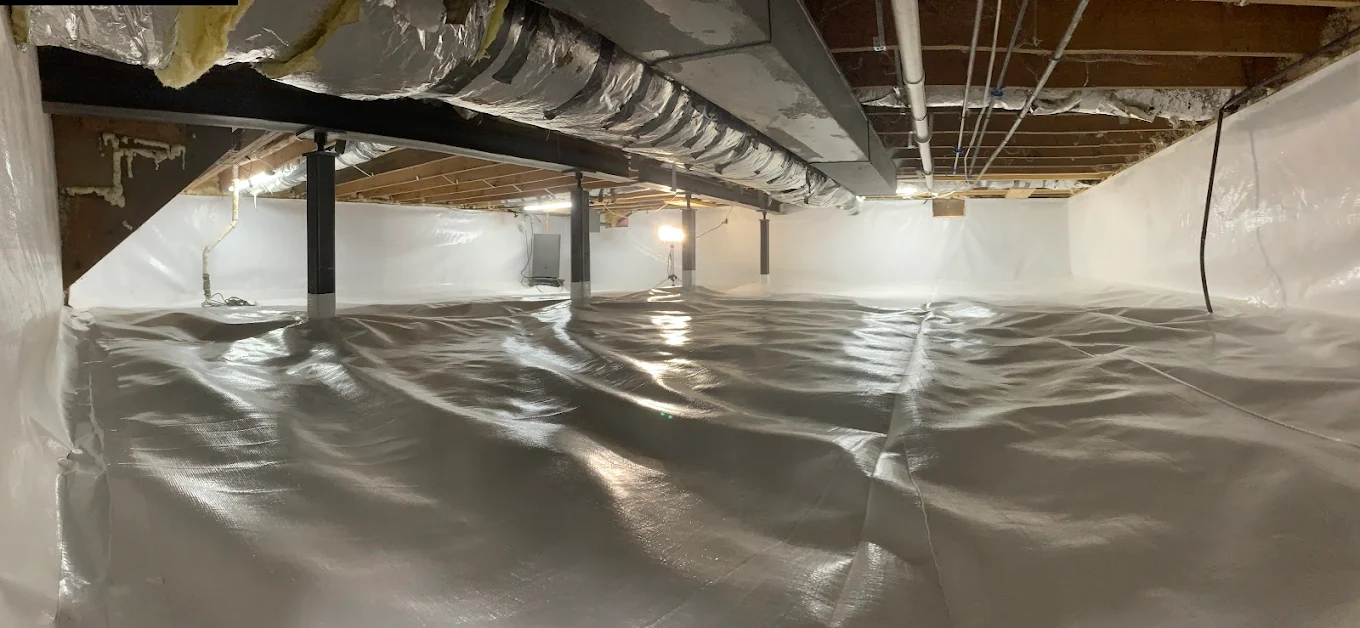
Crawl space encapsulation seals the space from the conditions that cause moisture buildup. The goal is to create a controlled, dry environment beneath the home that stays consistent through every season.
The process involves installing a heavy-duty vapor barrier across the crawl space floor and often up the walls and around piers or supports. This liner blocks ground moisture from rising into the space and prevents warm, humid outdoor air from entering and condensing on cooler surfaces.
Encapsulation is often paired with a dehumidifier to actively manage humidity levels, especially during Indiana’s long, humid summers. Once sealed and controlled, the crawl space stays drier, which protects insulation, wood framing, and indoor air quality above.
Encapsulation is best for homes dealing with:
- Persistent humidity and condensation
- Musty odors that don’t go away
- Sagging or damp insulation
- Mold-friendly conditions
- High indoor humidity the HVAC can’t keep up with
What Crawl Space Waterproofing Does
Crawl space waterproofing focuses on stopping active water from entering or accumulating in the space. The goal is to direct water away from the crawl space before it causes damage.
This may include interior drainage channels that collect water at the perimeter, a sump pump system that discharges it away from the foundation, corrections to exterior grading or downspout discharge, or a combination of these depending on how water is getting in.
Waterproofing is designed to handle the source of water entry rather than just managing the humidity that follows. It’s the right approach when water is actively pooling, seeping through walls, or rising from below after storms.
Waterproofing is best for homes dealing with:
- Standing water in the crawl space after rain
- Visible seepage along walls or the floor
- Sump pump failure or overwhelmed drainage
- Water intrusion tied to grading or gutter issues
Key Differences Between Encapsulation & Waterproofing
Here’s a quick side-by-side to clarify what each approach handles:
- What it controls: Encapsulation manages humidity and vapor. Waterproofing manages active water entry.
- When it’s needed: Encapsulation is for ongoing condensation and dampness. Waterproofing is for pooling, seepage, or flooding.
- What’s installed: Encapsulation uses a sealed liner system plus dehumidification. Waterproofing uses drainage channels, sump pumps, and grading corrections.
- Best for: Encapsulation prevents moisture damage. Waterproofing removes water that’s already getting in.
- Can they overlap: Yes. Many Indiana homes benefit from both, especially when humidity is high and water is also entering during storms.
How To Know Which One Your Indiana Home Needs
Signs you may need encapsulation. Your crawl space feels damp or humid, insulation is sagging, there’s condensation on pipes or ductwork, musty odors drift into the home, or your HVAC runs constantly during summer without keeping up. These point to a humidity and vapor problem that sealing can solve.
Signs you may need waterproofing. Water pools in the crawl space after rain, you see mud or wet soil, there’s visible water entry along walls or the foundation perimeter, or your sump pump runs constantly and still can’t keep up. These point to active water intrusion that needs drainage and discharge solutions.
When you need both. If your crawl space has standing water after storms and stays humid even during dry stretches, a combined approach often makes the most sense. Waterproofing handles the active water, and encapsulation controls the environment so humidity doesn’t continue causing damage between storms. In Indiana, where wet springs can transition directly into humid summers, this combination is common.
FAQs About Crawl Space Encapsulation & Waterproofing
Is encapsulation worth it if I don't have standing water?
Yes. Encapsulation addresses humidity and vapor, which can cause damage even without visible water. Condensation, mold, and insulation failure don’t require standing water to develop.
Can I waterproof without encapsulating?
You can. If the primary issue is active water entry, waterproofing alone may be enough. However, if humidity stays high after the water is managed, encapsulation can provide additional protection.
How long does encapsulation last?
A properly installed encapsulation system can last 20 years or more with minimal maintenance. The liner materials are designed to resist moisture, punctures, and degradation over time.
Does waterproofing include a sump pump?
Often, yes. A sump pump is a common component of a crawl space waterproofing system, especially when water needs to be collected and discharged away from the foundation.
Will either solution help with musty odors?
Both can help, but encapsulation is typically more effective for odor control because it seals the space and reduces the humidity that allows odors to develop in the first place.
Which option costs more?
It depends on the scope of work. Encapsulation can be a larger upfront investment, but it often prevents ongoing damage that would cost more to repair later. A professional evaluation can clarify what’s needed and what’s optional.
Get The Right Solution For Your Crawl Space
Encapsulation and waterproofing are both effective, but they solve different problems. The right choice depends on whether your crawl space is dealing with humidity, active water, or both. At Crossroads Foundation Repair, we start with a clear evaluation of what’s happening beneath your home, then recommend solutions based on what will actually work long-term, not a one-size-fits-all package.
Schedule a free, no-obligation crawl space inspection today.
This article was reviewed for accuracy by Steven Kyle Leman, Owner and General Manager of Crossroads Foundation Repair. Steven has 15 years of hands-on experience with foundation repair and waterproofing systems across Indiana homes and holds certification through the National Foundation Repair Association with continuing education each year.