


And What To Do About It
Indiana summers bring more than heat. Between high humidity, heavy storm cycles, and ground that stays wet for weeks, conditions beneath your home can change fast. Most homeowners don’t think much about their crawl space until something shows up indoors: a musty smell that won’t go away, floors that feel different, or humidity that the AC can’t seem to keep up with.
At Crossroads Foundation Repair, we help homeowners across Indiana understand what summer does to a crawl space, and what it takes to protect it before small issues become expensive ones.
Why Summer Is the Hardest Season for Indiana Crawl Spaces
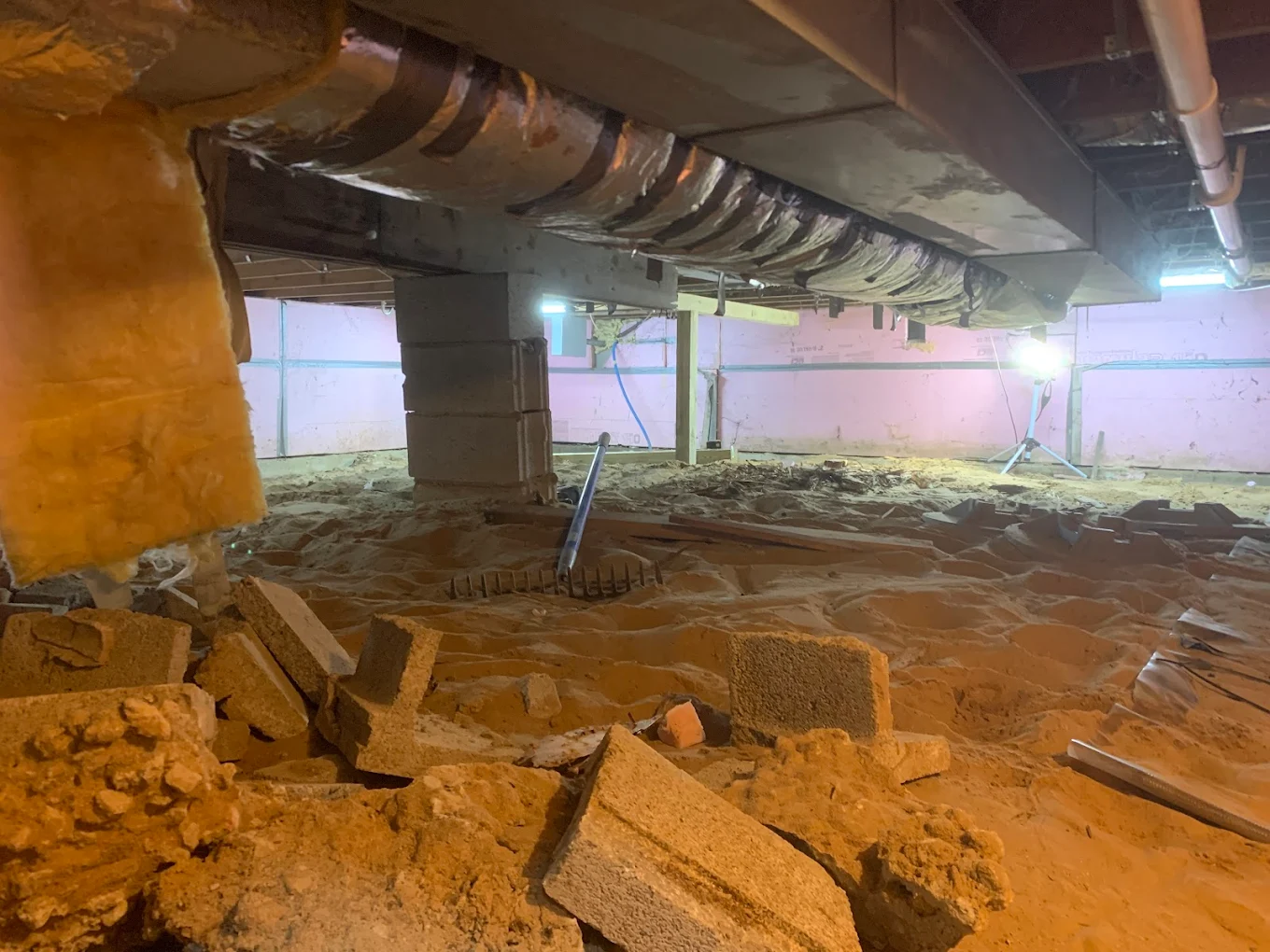
The basic problem is physics. During summer, warm, humid outdoor air naturally moves toward cooler spaces, and your crawl space is one of the coolest areas of the home. When that warm air hits cooler surfaces beneath the house, condensation forms. Moisture accumulates on ductwork, floor joists, and insulation, and it doesn’t dry out because the crawl space stays shaded and poorly ventilated.
Indiana makes this worse in a few ways. Our clay-heavy soil holds water long after storms pass, keeping the ground around and beneath the home damp. Summer storms can dump inches of rain in a short window, saturating the soil and raising groundwater levels. And unlike drier climates, Indiana humidity can stay elevated for weeks at a time, giving moisture no chance to escape naturally.
The result is a crawl space that stays wet far longer than most homeowners realize.
What Happens Inside Your Crawl Space During a Humid Summer
Once moisture takes hold, it follows a predictable pattern. Here’s what typically develops over the course of a humid Indiana summer:
- Condensation builds on surfaces: Pipes, ductwork, and floor joists collect water droplets as warm air meets cooler materials. This is often the first stage, and it can happen within days of sustained humidity.
- Insulation absorbs moisture and sags: Fiberglass insulation acts like a sponge when exposed to humidity. Once it absorbs enough water, it pulls away from the subfloor and loses its ability to insulate effectively.
- Wood components begin to soften or stain: Floor joists, rim boards, and subfloor materials can darken and soften as they repeatedly absorb moisture. Over time, this weakens the structural materials supporting your floors.
- Mold-friendly conditions develop: Mold doesn’t need standing water. It needs sustained moisture and organic material, both of which exist in most crawl spaces. Once conditions are right, growth can begin quickly.
- Pests find a welcoming environment: Damp, dark crawl spaces attract insects and rodents looking for moisture and shelter. Termites and carpenter ants are especially drawn to softened wood.
How Crawl Space Problems Show Up Inside Your Home
What happens below the home doesn’t stay below the home. Air moves upward through gaps in the subfloor, around ductwork, and through unsealed penetrations. That means crawl space moisture can affect the rooms you live in.
Common indoor symptoms include higher humidity that makes the home feel clammy even with the AC running, musty or stale odors that come and go with weather, uneven cooling across rooms, allergy or respiratory flare-ups that worsen during summer, and floors that feel soft, damp, or cooler than expected.
If any of these sound familiar and you have a crawl space, the source may be beneath your feet.
What To Do Before Summer Gets Worse
You don’t need to crawl under the house yourself to start taking action. A few simple checks can help you understand whether your crawl space needs professional attention.
- Check gutters and downspout discharge: Make sure water is being directed away from the foundation, not pooling near it. Clogged gutters or short downspouts are one of the most common contributors to crawl space moisture.
- Look for standing water or visible condensation: If you can safely peek into the crawl space access, check for pooling water, dripping pipes, or visible moisture on surfaces.
- Note any new odors or comfort changes: Musty smells, increased humidity, or floors that feel different may indicate conditions are worsening below.
- Schedule a professional crawl space evaluation: If you’re seeing any of the signs above, a professional inspection can identify the source and severity so you know what you’re dealing with.
Long-Term Solutions That Protect Your Crawl Space Year-Round
Temporary fixes like fans or seasonal dehumidifiers can help manage symptoms, but they don’t solve the underlying conditions. Long-term protection starts with controlling how moisture enters and behaves in the crawl space.
Crawl Space Encapsulation
Encapsulation seals the crawl space with a heavy-duty liner system that separates the space from ground moisture and outside air. It’s the most comprehensive approach for homes with recurring humidity and condensation issues.
Vapor Barriers
A vapor barrier covers the crawl space floor to reduce moisture rising from the ground. It’s effective as a standalone solution for less severe cases or as part of a broader encapsulation system.
Drainage & Dehumidification
If water is actively entering the crawl space, drainage solutions help route it away before it accumulates. Paired with a dehumidifier sized for the space, this combination keeps humidity consistently low through all seasons.
Structural Repairs (When Moisture Has Caused Damage)
If wood components have softened, sagged, or deteriorated due to prolonged moisture exposure, structural repairs may be needed to restore floor support and stability. Addressing the moisture source first ensures the repairs hold up long-term.
FAQs About Crawl Spaces & Indiana Summers
Does every crawl space need encapsulation?
Not necessarily. Some crawl spaces manage well with a vapor barrier and proper drainage. The right solution depends on how moisture is entering and how severe conditions are.
Can I just run a dehumidifier instead?
A dehumidifier can help manage humidity, but it works best when paired with sealing or a vapor barrier. Running one in an unsealed crawl space is like running the AC with the windows open.
How fast can mold develop in a humid crawl space?
Under the right conditions, mold can begin developing within 24 to 48 hours of sustained moisture. Indiana summers can create those conditions quickly.
Will fixing my crawl space lower my energy bills?
Often, yes. Reducing humidity and improving insulation performance can help HVAC systems run more efficiently, especially during summer.
Should I close crawl space vents in summer?
In many cases, open vents allow humid air in rather than promoting drying. Sealing or closing vents is often part of a proper moisture control plan, but it depends on the home.
When is the best time to schedule crawl space work?
Any time works, but spring and early summer are ideal for catching problems before peak humidity hits. If you’re already seeing symptoms, don’t wait.
Keep Your Crawl Space Protected This Summer
Indiana summers quietly create the conditions that lead to crawl space damage: sustained humidity, condensation, and moisture that doesn’t dry out on its own. The good news is that early action is usually simpler and more cost-effective than waiting until structural materials or air quality are affected.
Crossroads Foundation Repair provides free, no-obligation crawl space inspections and honest guidance on what your home actually needs.
Schedule your crawl space inspection today.
This article was reviewed for accuracy by Steven Kyle Leman, Owner and General Manager of Crossroads Foundation Repair. Steven has 15 years of hands-on experience with foundation repair and waterproofing systems across Indiana homes and holds certification through the National Foundation Repair Association with continuing education each year.